Renovating a riad without losing its soul: modernity and authenticity
renovating a riad without losing its soul: modernity and authenticity
15 June 2026
Renovating without losing the riad’s soul: finding the balance between modernity and authenticity
The Moroccan riad captivates with its interior architecture, its intimate atmosphere, and the discreet refinement of its artisanal details. In Marrakech as in other historic cities of Morocco, many owners are now undertaking renovations to adapt these traditional homes to the demands of modern comfort. Yet a poorly conceived renovation can quickly erase what constitutes the very soul of a riad.
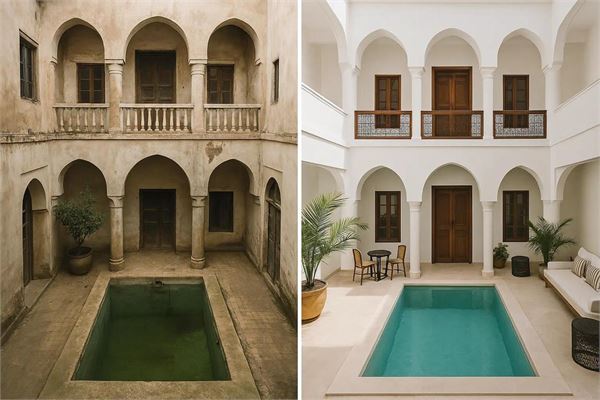
Renovating a riad is not just about modernizing an old space. Above all, it is about preserving an architectural and cultural identity while creating a pleasant, functional, and durable place to live. The balance between authenticity and modernity depends on a sensitive approach that respects the materials, the volumes, and the spirit of the place.
Understanding the essence of the Moroccan riad
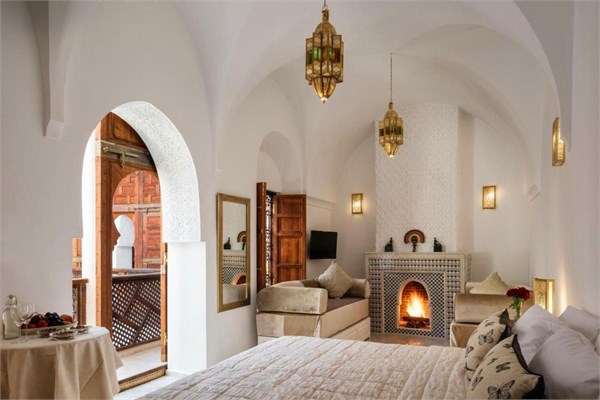
The traditional riad is designed around a central patio that organizes the life of the house. This architecture responds to specific climatic, social, and aesthetic needs: preserving privacy, promoting natural coolness, and creating a calm space sheltered from outside bustle.
The elements that give a riad its character are numerous:
handcrafted zellige tiles,
tadelakt,
carved wooden ceilings,
antique doors,
wrought ironwork,
arches,
fountains and water features,
natural materials and mineral colors.
Before any renovation, it is essential to identify these elements in order to decide which should be restored, preserved, or highlighted.
Restore rather than replace
One of the most common mistakes is wanting to redo everything from scratch. Yet irregularities, patinas, and traces of time often contribute to the beauty of a riad.
A slightly marked antique door, a patinated tadelakt wall, or a restored artisanal ceiling retain an authenticity that no industrial material can reproduce. Whenever possible, it is preferable to restore existing elements rather than replace them.
This approach also helps preserve the know-how of Moroccan artisans. Woodwork, carved plaster, and zellige are integral parts of Morocco’s architectural heritage and deserve to be valued in every renovation project.
Introduce modernity with subtlety
Modernizing a riad does not mean turning the space into a standardized contemporary interior. Modernity should remain discreet and improve comfort without dominating the traditional architecture.
The most successful contemporary interventions are often the most understated:
furniture with clean lines,
indirect, warm lighting,
minimalist bathrooms,
slender glass partitions,
built-in storage,
discreetly concealed technologies.
The contrast between old and contemporary works when it remains balanced. Minimalist furniture can perfectly dialogue with tadelakt walls or carved ceilings, provided the overall harmony of the place is respected.
Focus on natural materials
The choice of materials plays a central role in the success of a renovation. Natural materials help maintain the warmth and authenticity characteristic of Moroccan riads.
Stone, wood, linen, lime, or polished concrete with soft finishes integrate naturally into this type of architecture. Conversely, overly shiny materials, excessively smooth surfaces, or industrial finishes risk breaking the aesthetic balance of the place.
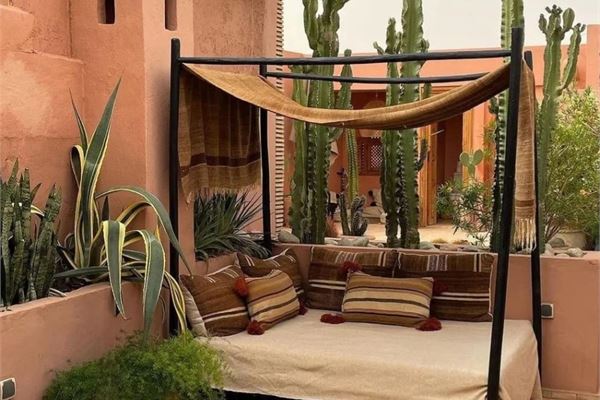
Colors should also remain consistent with the spirit of the riad: sand tones, terracotta, beige, off-white, or mineral hues create a timeless, soothing ambiance.
Respect the light and the volumes
Light in a riad has a special quality. It crosses the patio, creates plays of shadow, and highlights the textures of the materials. A successful renovation seeks to preserve this atmosphere rather than radically transform it.
It is often preferable to avoid excessive openings or fully open-plan spaces that can alter the traditional layout of the riad. The patio should remain the living heart of the house, around which the spaces naturally articulate.
Artificial lighting also deserves special attention. Soft, indirect light helps maintain the intimate ambiance typical of Moroccan riads.
Integrate modern comfort without compromising the place
Today’s expectations in terms of comfort are very different from those of the original traditional homes. Air conditioning, heating, insulation, or smart-home equipment can be integrated without compromising the riad’s aesthetics.
The goal is to make these installations almost invisible:
discreetly integrated air conditioning,
underfloor heating,
appropriate thermal insulation,
recessed lighting systems,
technical equipment hidden within the architecture.
When the technology fades into the background, the riad retains all its poetry while meeting contemporary needs.
Showcase Moroccan craftsmanship
The charm of a riad also rests on the richness of Moroccan craftsmanship. A successful renovation should allow these skills to continue to live on in a more current language.
Pairing artisanal pieces with contemporary design often creates elegant, timeless spaces. A Berber rug, a brass pendant, or hand-crafted zellige can coexist harmoniously with modern furniture featuring clean lines.
This approach avoids excessively folkloric decor while maintaining a true Moroccan identity.
Conclusion
Renovating a riad without losing its soul requires finding a delicate balance between preserving heritage and adapting to contemporary lifestyles. The success of such a project depends less on the accumulation of decorative elements than on respect for the architecture, the materials, and the atmosphere of the place.
An authentic riad does not seek to impress through excess. It captivates with its calm, its light, its materials, and its discreet elegance. Modernity naturally finds its place there when it accompanies the history of the site instead of erasing it.Renovating without losing the riad’s soul: finding the balance between modernity and authenticity
The Moroccan riad captivates with its interior architecture, its intimate atmosphere, and the discreet refinement of its artisanal details. In Marrakech as in other historic cities of Morocco, many owners are now undertaking renovations to adapt these traditional homes to the demands of modern comfort. Yet a poorly conceived renovation can quickly erase what constitutes the very soul of a riad.
Renovating a riad is not just about modernizing an old space. Above all, it is about preserving an architectural and cultural identity while creating a pleasant, functional, and durable place to live. The balance between authenticity and modernity depends on a sensitive approach that respects the materials, the volumes, and the spirit of the place.
Understanding the essence of the Moroccan riad
The traditional riad is designed around a central patio that organizes the life of the house. This architecture responds to specific climatic, social, and aesthetic needs: preserving privacy, promoting natural coolness, and creating a calm space sheltered from outside bustle.
The elements that give a riad its character are numerous:
handcrafted zellige tiles,
tadelakt,
carved wooden ceilings,
antique doors,
wrought ironwork,
arches,
fountains and water features,
natural materials and mineral colors.
Before any renovation, it is essential to identify these elements in order to decide which should be restored, preserved, or highlighted.
Restore rather than replace
One of the most common mistakes is wanting to redo everything from scratch. Yet irregularities, patinas, and traces of time often contribute to the beauty of a riad.
A slightly marked antique door, a patinated tadelakt wall, or a restored artisanal ceiling retain an authenticity that no industrial material can reproduce. Whenever possible, it is preferable to restore existing elements rather than replace them.
This approach also helps preserve the know-how of Moroccan artisans. Woodwork, carved plaster, and zellige are integral parts of Morocco’s architectural heritage and deserve to be valued in every renovation project.
Introduce modernity with subtlety
Modernizing a riad does not mean turning the space into a standardized contemporary interior. Modernity should remain discreet and improve comfort without dominating the traditional architecture.
The most successful contemporary interventions are often the most understated:
furniture with clean lines,
indirect, warm lighting,
minimalist bathrooms,
slender glass partitions,
built-in storage,
discreetly concealed technologies.
The contrast between old and contemporary works when it remains balanced. Minimalist furniture can perfectly dialogue with tadelakt walls or carved ceilings, provided the overall harmony of the place is respected.
Focus on natural materials
The choice of materials plays a central role in the success of a renovation. Natural materials help maintain the warmth and authenticity characteristic of Moroccan riads.
Stone, wood, linen, lime, or polished concrete with soft finishes integrate naturally into this type of architecture. Conversely, overly shiny materials, excessively smooth surfaces, or industrial finishes risk breaking the aesthetic balance of the place.
Colors should also remain consistent with the spirit of the riad: sand tones, terracotta, beige, off-white, or mineral hues create a timeless, soothing ambiance.
Respect the light and the volumes
Light in a riad has a special quality. It crosses the patio, creates plays of shadow, and highlights the textures of the materials. A successful renovation seeks to preserve this atmosphere rather than radically transform it.
It is often preferable to avoid excessive openings or fully open-plan spaces that can alter the traditional layout of the riad. The patio should remain the living heart of the house, around which the spaces naturally articulate.
Artificial lighting also deserves special attention. Soft, indirect light helps maintain the intimate ambiance typical of Moroccan riads.
Integrate modern comfort without compromising the place
Today’s expectations in terms of comfort are very different from those of the original traditional homes. Air conditioning, heating, insulation, or smart-home equipment can be integrated without compromising the riad’s aesthetics.
The goal is to make these installations almost invisible:
discreetly integrated air conditioning,
underfloor heating,
appropriate thermal insulation,
recessed lighting systems,
technical equipment hidden within the architecture.
When the technology fades into the background, the riad retains all its poetry while meeting contemporary needs.
Showcase Moroccan craftsmanship
The charm of a riad also rests on the richness of Moroccan craftsmanship. A successful renovation should allow these skills to continue to live on in a more current language.
Pairing artisanal pieces with contemporary design often creates elegant, timeless spaces. A Berber rug, a brass pendant, or hand-crafted zellige can coexist harmoniously with modern furniture featuring clean lines.
This approach avoids excessively folkloric decor while maintaining a true Moroccan identity.
Conclusion
Renovating a riad without losing its soul requires finding a delicate balance between preserving heritage and adapting to contemporary lifestyles. The success of such a project depends less on the accumulation of decorative elements than on respect for the architecture, the materials, and the atmosphere of the place.
An authentic riad does not seek to impress through excess. It captivates with its calm, its light, its materials, and its discreet elegance. Modernity naturally finds its place there when it accompanies the history of the site instead of erasing it.


L'équipe de Real-dreamhouse
Notre équipe dynamique et dédiée à la clé de votre succès. Nous offrons un service professionnel sur mesure, respectant des standards élevés pour réaliser vos ambitions immobilières.

Benoit PRIVEL
Fondateur Manager
Salwa SAMSAK
Manager Événementiel
Sophie BELLAVOINE
Manager Consultant
Tawfik BOUAMANE
Consultant Manager RabatContact us for a free valuation of your property!
Get a free and reliable valuation of your property in Marrakech, carried out by our local experts.